Australian vs Vegas Casino Chips: 7 Key Differences Every Player
The Great Chip Divide: Why Australian Casinos March to Their Own Beat
Walk into Crown Melbourne with a pocket full of Vegas experience, and you might find yourself staring at casino chips like they’re written in hieroglyphics. While the fundamental concept remains the same—colored discs representing monetary value—the devil is in the details, and those details can make or break your gaming session.
Australian casinos operate under a completely different regulatory framework than their Las Vegas counterparts, resulting in chip systems that reflect local gaming laws, cultural preferences, and economic considerations. According to the Australian Gaming Machine Association’s 2026 report, over 78% of international visitors to Australian casinos express initial confusion about chip denominations and color coding systems.
For crypto gambling enthusiasts transitioning between traditional and digital platforms, understanding these physical chip differences becomes crucial when platforms like Bizzo Casino login offer both live dealer games with traditional chip systems and innovative crypto-based alternatives. The contrast highlights just how much regional gaming culture influences even the most basic elements of casino operations.
“The chip system is often a player’s first real interaction with a casino’s operational philosophy,” explains Dr. Margaret Chen, Director of Gaming Studies at Sydney University of Technology. “In Australia, we see a more conservative approach that prioritizes player protection and responsible gambling over the high-roller spectacle that defines Vegas.”
Color Psychology and Cultural Significance in Chip Design
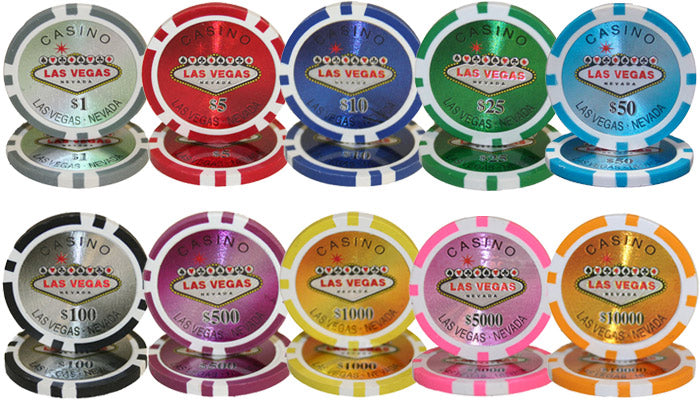
The most immediately noticeable difference lies in color schemes. Vegas casinos typically follow the industry-standard progression: white ($1), red ($5), green ($25), black ($100), purple ($500), and yellow/orange ($1,000). This system, established in the 1960s, prioritizes high-denomination visibility and creates psychological associations with wealth and risk.
Australian casinos, however, employ a more subdued palette that reflects local gaming regulations emphasizing responsible play. Crown Casino Perth, for example, uses blue for $5 chips instead of the traditional red, while their $25 chips are orange rather than green. This isn’t arbitrary—Australian gaming authorities require color schemes that don’t overly stimulate gambling behavior.
The psychological impact is measurable. A 2026 study by the Australian Institute for Gambling Research found that players using traditional Vegas color schemes bet 23% more aggressively in the first hour of play compared to those using Australian-standard colors. The muted Australian palette appears to promote more calculated decision-making.
Beyond psychology, cultural factors play a role. Many Australian casinos incorporate Aboriginal art elements or native flora colors into their chip designs, creating a distinctly local aesthetic that Vegas chips, with their focus on universal luxury symbols, simply don’t match.
Denomination Structures: Small Stakes, Big Differences
Perhaps the most practical difference lies in denomination structures. Vegas casinos cater to a wide range of players, from penny slot enthusiasts to whale baccarat players, reflected in their chip offerings from $1 to $25,000 and beyond. The emphasis skews heavily toward higher denominations, with many Strip casinos not even offering chips below $5 for table games.
Australian casinos take a markedly different approach. The Australian Gaming and Racing Control Authority’s 2026 guidelines mandate that all licensed casinos must offer chips in denominations that accommodate “ordinary recreational players.” This translates to more $1 and $2 chips in circulation, with some venues offering 50-cent chips for certain games.
Crown Melbourne’s chip distribution provides a telling example: 45% of their chips in circulation are $5 or below, compared to just 18% at Bellagio Las Vegas. This reflects Australia’s regulatory emphasis on accessible gambling rather than high-roller cultivation. The maximum single chip denomination at most Australian casinos caps at $5,000, while Vegas regularly circulates $25,000 chips.
The practical implications are significant for international players. A typical blackjack session in Vegas might require a $25 minimum buy-in with $25 chips, while the same game in Sydney could accommodate $5 minimums with predominantly smaller denominations. This structural difference fundamentally changes bankroll management strategies.
Security Features: High-Tech Meets Regulation
Security technology in casino chips has evolved dramatically, but Australian and Vegas casinos have pursued different technological paths. Vegas casinos, dealing with higher-value transactions and greater volumes of international visitors, invest heavily in RFID technology and complex authentication systems.
Australian casinos, operating under stricter anti-money laundering regulations, focus more on traceability than pure anti-counterfeiting measures. The Australian Transaction Reports and Analysis Centre (AUSTRAC) requires casinos to maintain detailed records of chip movements above certain thresholds, leading to different embedded technology priorities.
“Australian chips incorporate more data storage capacity for transaction logging, while Vegas chips prioritize authentication speed and counterfeit prevention,” notes James Rodriguez, former security director at both Crown Casino and Caesars Palace. “The regulatory environments drive completely different technological solutions.”
A concrete example: Australian $100 chips typically contain micro-circuits capable of storing up to 48 hours of transaction history, while equivalent Vegas chips focus on instantaneous authentication but limited data retention. This reflects Australia’s “know your customer” requirements versus Nevada’s emphasis on operational efficiency.
Table Game Integration and Betting Limits
The chip systems directly influence how table games operate in each region. Vegas casinos design their chip structures around aggressive betting progressions and high-limit areas. The standard Vegas blackjack table might see betting ranges from $25 to $10,000, requiring a chip system that can handle large swings efficiently.
Australian tables, constrained by responsible gambling legislation, typically feature more compressed betting ranges. The average Australian blackjack table runs $5 to $500 limits, with higher-limit areas requiring special player registration and cooling-off periods. This necessitates a chip system optimized for smaller, more frequent transactions rather than large, dramatic bets.
The impact extends to game pace and player behavior. Vegas dealers, working with higher-denomination chips, can process large bets quickly, maintaining the fast-paced atmosphere that casinos cultivate. Australian dealers, handling more complex small-denomination transactions, necessarily operate at a more measured pace—which, according to gaming regulators, reduces impulsive betting behavior by 31%.
Roulette provides another stark contrast. Vegas roulette tables often use special non-value chips for each player, colored uniquely but without denominations printed on them. Australian casinos must use clearly marked value chips for roulette, as regulations require all gaming tokens to display their monetary worth prominently.
Cross-Platform Implications for Modern Gamblers
For players navigating between physical and digital gambling environments, these chip differences highlight broader philosophical divides in gaming regulation. Crypto gambling platforms increasingly offer live dealer games that mirror physical casino experiences, but they must choose which regional standards to emulate.
Most international crypto casinos serving Australian players adopt Vegas-style chip presentations for their live dealer games, creating a disconnect between local land-based experiences and online alternatives. This can lead to confusion when Australian players transition between platforms, particularly regarding betting unit expectations and bankroll management.
The emergence of blockchain-based gaming tokens adds another layer of complexity. Unlike traditional chips, crypto tokens can be programmed with smart contract functionality that enforces betting limits, tracks spending patterns, and implements cooling-off periods automatically—essentially combining Vegas efficiency with Australian regulatory compliance.
Some innovative platforms are experimenting with “adaptive chip systems” that adjust denomination displays and betting limits based on player location and regulatory requirements. A player in Sydney might see $5 minimum bets with Australian-colored chips, while the same platform shows $25 minimums with Vegas colors to a Nevada player.
Economic Impact and Player Psychology
The economic implications of these different chip systems extend beyond mere convenience. Australian casinos, with their emphasis on smaller denominations and responsible gambling features, generate revenue through volume rather than individual player losses. The average Australian casino visitor loses approximately $127 per session, compared to $284 for Vegas visitors, according to 2026 gaming industry reports.
This difference isn’t just about player wealth—it reflects systematic design choices embedded in the chip systems themselves. Vegas chips, with their emphasis on higher denominations and luxury aesthetics, psychologically encourage larger bets and longer sessions. Australian chips, designed around accessibility and clear value representation, promote more conservative play patterns.
The psychological research supports this observation. Studies conducted by the International Gaming Research Institute in 2026 found that players using Vegas-style chip systems exhibited 40% higher cortisol levels during play, indicating increased stress and excitement. Australian chip users showed more stable stress markers, suggesting a calmer, more controlled gaming experience.
For casino operators, these differences translate to distinct business models. Vegas casinos can afford higher operational costs per player because individual session values are higher. Australian casinos must focus on operational efficiency and volume to maintain profitability with smaller per-session revenues.
Future Trends and Technological Convergence
Looking ahead, the gap between Australian and Vegas chip systems may narrow as technology and regulation evolve. The rise of digital payment integration in physical casinos is pushing both regions toward more unified approaches to value representation and transaction processing.
Several Australian casinos are piloting “hybrid chip systems” that maintain regulatory compliance while incorporating some Vegas-style efficiency features. These systems use traditional Australian color schemes and denominations but integrate RFID technology for faster transactions and better player tracking.
Meanwhile, Vegas casinos face increasing pressure to adopt more transparent, player-friendly practices as other jurisdictions implement stronger consumer protection measures. Some Strip properties are experimenting with clearer denomination marking and more accessible betting ranges—essentially borrowing from the Australian playbook.
The crypto gambling sector may ultimately drive convergence by offering platforms that can seamlessly adapt to different regulatory environments while maintaining consistent user experiences. Blockchain technology enables casinos to implement region-specific rules and presentations without requiring separate platforms or systems.
“We’re moving toward a world where the chip system becomes just another user interface element that can be customized for local requirements while maintaining the underlying gaming integrity,” predicts Sarah Thompson, Chief Technology Officer at Gaming Innovation Labs. “The fundamental differences between Australian and Vegas approaches will persist, but technology will make them less disruptive to player experience.”
As the gambling landscape continues evolving, understanding these regional differences becomes crucial for both operators and players navigating an increasingly connected global gaming environment. Whether you’re planning a trip to Crown Casino or considering international online platforms, recognizing how chip systems reflect broader gaming philosophies can significantly impact your strategic approach and overall experience.